
Why Indoor Advertising is a Smart and Affordable Boost for Local Business

A local business does not always need a large outdoor hoarding or a costly campaign to be noticed. Sometimes, the best place to be seen is inside the lift people use every day, near the food court they visit on weekends, or on a smart LED screen at a restaurant where families spend time together.
That is the strength of indoor advertising. It puts a business message in front of people when they are already present in a trusted, familiar space. For small shops, clinics, salons, coaching classes, cafés, restaurants, fitness studios, real estate consultants, and local service providers, this can be a practical way to reach nearby customers without spending heavily.
Indoor media works because it is close to daily life. A resident waiting inside a society lift. A shopper walking through a mall. A diner looking around while waiting for food. A visitor sitting in a hospital lounge. These are all simple, high-attention moments where a local brand can be seen.

Indoor advertising meets people where they already are
Local marketing works best when it appears in the right place. A restaurant wants to reach nearby families. A dentist wants people in the same neighbourhood to know about the clinic. A tuition centre wants parents from surrounding societies to remember its name. A salon wants repeat visits from people who live or work close by.
Indoor media helps because it is placed in areas with regular footfall, such as:
Residential society lifts and lobbies
Shopping malls and food courts
Restaurants and cafés
Gyms and fitness centres
Hospitals and clinics
Supermarkets and retail stores
Office building common areas
Public waiting zones
These places already attract people who may need local products and services. A smart LED screen in a society lift can remind residents about a nearby grocery store, pharmacy, cleaning service, home tutor, tiffin service, or restaurant. A screen inside a shopping mall can support a store, café, event, or service in the same area.
The key benefit is simple. The audience is not random. They are nearby, present, and often part of the same local community. That makes the message more relevant.
It supports local businesses without heavy spending
Many local businesses work with careful budgets. A large newspaper ad, outdoor hoarding, or citywide campaign may not be affordable. Even if it is affordable, it may not always bring the right local customers.
Indoor media can be more budget-friendly because campaigns can be planned for specific locations. A business can choose a society, a nearby mall, a restaurant network, or a few public places instead of paying to reach an entire city.
This makes it useful for businesses that want visibility on nominal charges.
For example, a local bakery may not need to advertise across the whole city. It may only need to reach families in nearby housing societies and shoppers within a small radius. A yoga class may benefit more from being seen in apartment lifts than from being shown to people far away. A new café can promote its opening inside nearby restaurants, salons, or lifestyle spaces where local residents already visit.
The spend becomes more focused. The business avoids paying for unnecessary reach and puts money into locations where potential customers are more likely to visit.
Society lift advertising gives repeated visibility
Residential lifts are among the strongest indoor locations for local communication. People use them daily, often multiple times. They may spend only a short time inside, but the attention level is high because there are fewer distractions.
A smart LED screen inside or near a lift can show short, clear messages. A resident may see the same business name during morning school drop-off, evening office return, weekend shopping, and festival preparation. This repeated exposure helps people remember a local business.
For local services, this matters a lot. People often choose what they can easily recall.
A resident may need:
A nearby restaurant for dinner
A plumber or electrician
A home cleaning service
A diagnostic lab
A salon appointment
A tuition class for a child
A pet grooming service
A real estate consultant
A home delivery grocery option
When the need appears, the business that has been seen often inside the society has a better chance of being remembered.
Society lift media also feels local. It does not look distant or unrelated. It appears within the resident’s own living environment, which can make the message feel more useful and accessible.

Shopping malls add strong footfall and buying intent
Shopping malls bring together people who are already in a spending mindset. They may be there for food, fashion, entertainment, grocery shopping, or family time. This makes malls a useful indoor media location for many local businesses.
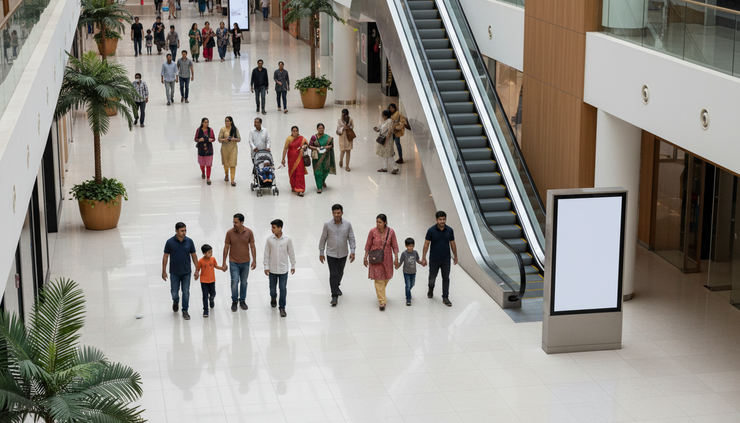
A smart LED screen near an entrance, escalator, food court, corridor, or waiting zone can capture attention from people moving through the mall. The message can support businesses inside the mall as well as nearby stores and services outside it.
Mall-based indoor media can help:
A restaurant promote a lunch offer
A salon announce a festive package
A clinic create awareness in the area
A real estate advisor reach local home buyers
A coaching class connect with parents
A boutique attract weekend shoppers
A local event reach families
Malls are especially useful because of mixed audience groups. Families, students, working professionals, senior citizens, and young adults may all pass through the same space. For a business that serves a broad local audience, this can create strong awareness.
The pace also helps. People slow down near escalators, queues, billing counters, benches, cafés, and food courts. These pause points are ideal for short, clear communication.
Restaurants and cafés offer relaxed attention
Restaurants, cafés, and food courts create a different kind of visibility. People are not rushing through. They wait for orders, talk, glance around, and spend time indoors. A smart LED screen in such places can get attention naturally.
This works well for local businesses that want to be remembered in a friendly, everyday setting.
For example, a nearby dessert shop can reach families dining out. A gym can reach young professionals visiting a café. A local event organiser can promote a weekend activity. A clinic can share awareness of health check-ups in a calm waiting environment, without making the message too heavy.
Restaurants also create strong community value. Many local businesses support each other through indoor media. A neighbourhood restaurant can display messages from a nearby florist, bakery, salon, or gift shop. In return, these businesses may refer customers back to the restaurant. This kind of local connection helps the whole area grow.
The best messages in restaurants are short and visual. People should understand them in a few seconds. A simple offer, location, contact method, and service name are usually enough.
Smart LED screens make messages more flexible
Traditional printed posters can work, but smart LED screens offer more flexibility. A business can change the message based on time, season, festival, or offer. This is useful in India, where shopping behaviour often changes around festivals, school admissions, weddings, exams, and local events.
A restaurant can promote lunch during the afternoon and dinner in the evening. A salon can highlight bridal services during wedding season. A coaching class can promote admission batches before the academic year. A sweet shop can focus on festive gifting before Diwali.
Smart LED indoor media also looks neat and modern. The screen can rotate multiple messages in a clean format. This allows different local businesses to share space without making the location look crowded.
A good smart LED message should have:
A clear headline
One main offer or service
Easy-to-read text
Local area mention if relevant
A phone number, QR code, or simple next step
Clean visuals with no clutter
The goal is quick recall. People should be able to understand the message before the screen changes.
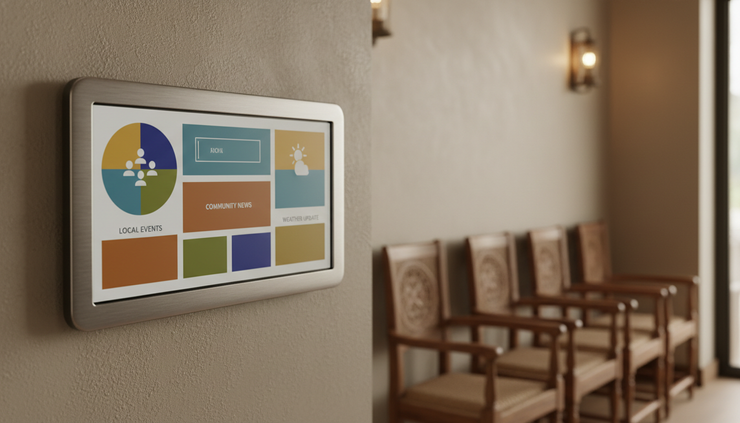
Indoor media builds trust through familiar surroundings
People trust what they see repeatedly in familiar places. A message inside a society, mall, restaurant, clinic, or supermarket can feel more grounded than a random message seen online.
This does not mean people will buy immediately. Local awareness often grows slowly. A person may notice a business name today, remember it next week, and call a month later when the need comes.
That is why indoor advertising is useful for services with regular or future demand. A dental clinic, tuition centre, real estate consultant, home repair service, salon, laundry service, cloud kitchen, or fitness studio may not get instant enquiries from every viewer. But the message stays in memory.
Trust also grows when the business appears in the same community where people live, shop, and eat. It signals that the business is nearby and accessible. For many local customers, distance matters. If two businesses offer similar services, people often prefer the one closer to home.
It helps businesses reach more people during daily routines
Outdoor ads depend on road visibility. Online ads depend on phone use and platform behaviour. Indoor media sits inside daily routines.
This is valuable because routines are predictable. People use lifts, visit shops, wait for appointments, sit in restaurants, and walk through malls. When a business appears in these places, it becomes part of the local rhythm.
Here is how different indoor locations can support different goals:
Indoor location | Best suited for | Why it works |
Society lifts | Home services, food delivery, tutors, clinics, salons | Residents see the message often |
Mall screens | Retail stores, restaurants, events, services | High footfall and mixed audience |
Restaurants | Local shops, events, fitness, lifestyle services | People spend relaxed time indoors |
Clinics and waiting areas | Health services, pharmacies, wellness brands | Visitors have time to notice messages |
Supermarkets | Daily-use products, local offers, food brands | Customers are already in a buying mindset |
A smart plan may combine two or three locations. For example, a new restaurant can run messages in nearby societies, a small mall, and a few cafés. A home service provider can focus on residential lifts and supermarkets. A coaching class can choose societies, bookstores, and family restaurants.
The message must be simple to work well
Indoor media is powerful, but only when the message is easy to read. Many businesses try to say too much. That makes the screen crowded and weakens recall.
A good indoor ad should answer a few basic questions quickly:
What is being offered?
Who is it for?
Where is it available?
What should the viewer do next?
For a local restaurant, the message may focus on home delivery, family dining, or a weekday lunch offer. For a salon, it may highlight services, location, and appointment details. For a clinic, it may show the speciality, timing, and contact number.
Keep the text large. Use one clear image if needed. Avoid too many colours. If using a QR code, keep it big enough to scan. If using a phone number, make it readable from a normal viewing distance.
A practical message may be as simple as:
“Fresh home-style meals near your society. Lunch and dinner delivery available. Call or WhatsApp to order.”
That kind of message works because people understand it at once. It speaks to a local need and gives a direct next step.
Why local businesses should take indoor media seriously
Local business growth depends on visibility, recall, and trust. Indoor media supports all three.
It gives visibility in places people already visit. It builds recall through repeated viewing. It supports trust by appearing inside familiar local spaces. It also keeps costs more controlled because businesses can choose specific areas and locations.
For small and medium businesses, the biggest benefit is focus. A campaign can target the community that matters most. There is no need to reach people who live too far away or are unlikely to visit.
Indoor media also works well with other efforts. A restaurant can combine society lift screens with WhatsApp ordering. A salon can pair mall visibility with walk-in discounts. A tuition centre can use indoor screens along with local referrals. A clinic can support awareness through society and waiting-area screens.
This makes indoor media a practical part of a wider local marketing plan.
A smart choice for affordable local reach
Indoor advertising works because it is close to people’s daily lives. It helps local businesses appear in society lifts, shopping malls, restaurants, cafés, and public indoor spaces where people already spend time.
For businesses working with limited budgets, this makes it a smart and affordable option. The charges can stay nominal compared with larger campaigns, while the reach can remain highly local and relevant. Smart LED screens add flexibility, making it easy to update messages for offers, seasons, events, and changing customer needs.
The best results come from choosing the right locations, keeping the message simple, and staying consistent. A local business that appears regularly in familiar indoor places becomes easier to remember, easier to trust, and easier to choose.

Comments